|
07:00 - Maggie and I woke up and went down to our morning breakfast and then went back to the room real quick to grab our supplies (food, water, toilet paper, etc.) and were off at 08:20. Our plan was to go to 2 forts, drive a bit in the mountains and see as much as possible. We had an outline, but wanted to keep our plans flexible as we were not sure how far we could since some areas we were interested in were off-road and a bit on the remote side according to the guides.
Nizwa was our first destination. Nizwa is about 175 kilometers (108.7 miles) from the Muscat Airport, inland up in the mountains (but not that high, just high for the Gulf!). In the early 50's or so, the famous British explorer Wilfred Thesiger had to go around Nizwa. The Bedouins had warned him if he went into town, he would not come out alive. It seems the Imams ruling the area were <extremely> conservative. Times have changed now and Nizwa is a hot tourist destination where all are welcome. Nizwa is also considered the place for crafts in Oman.
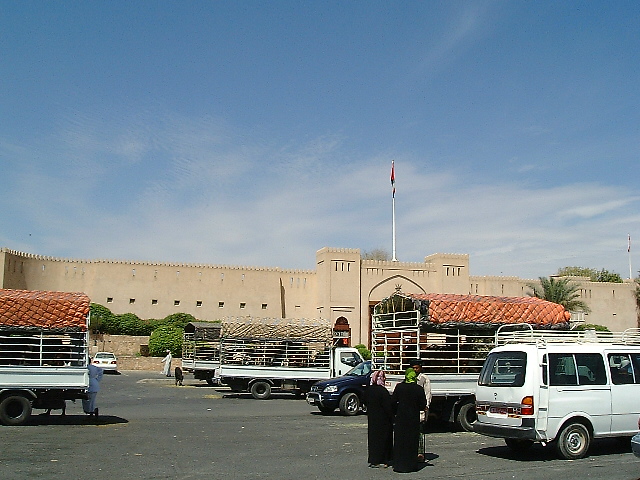
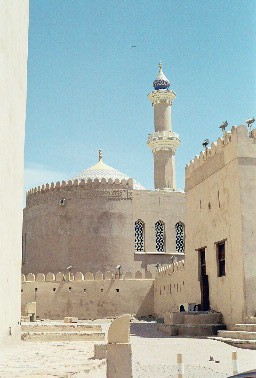
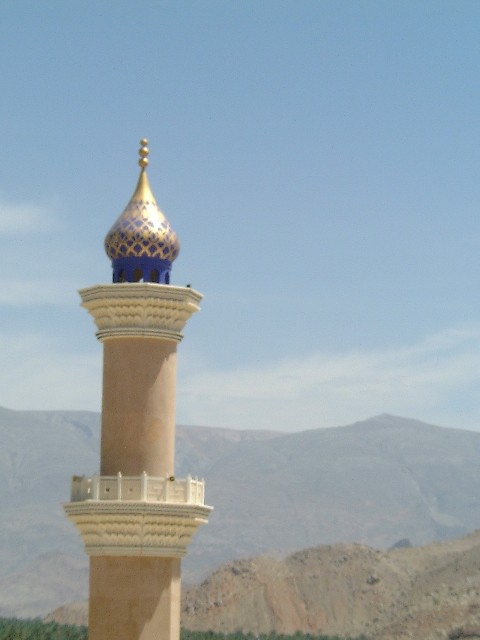
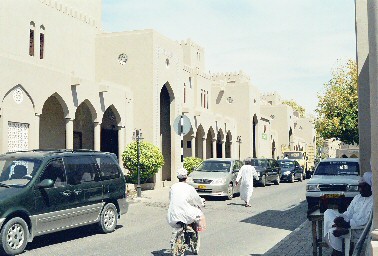
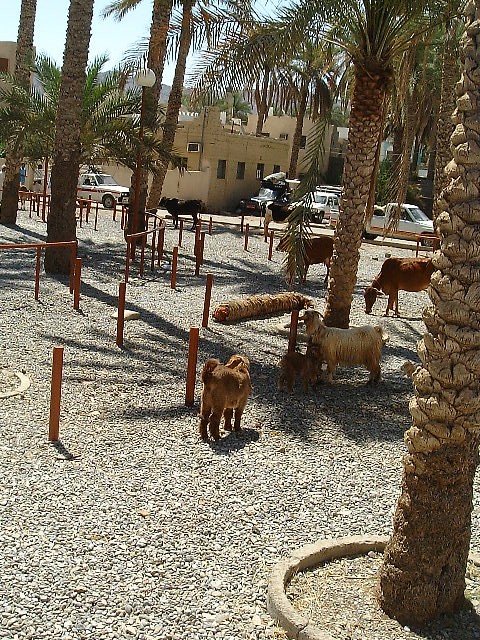
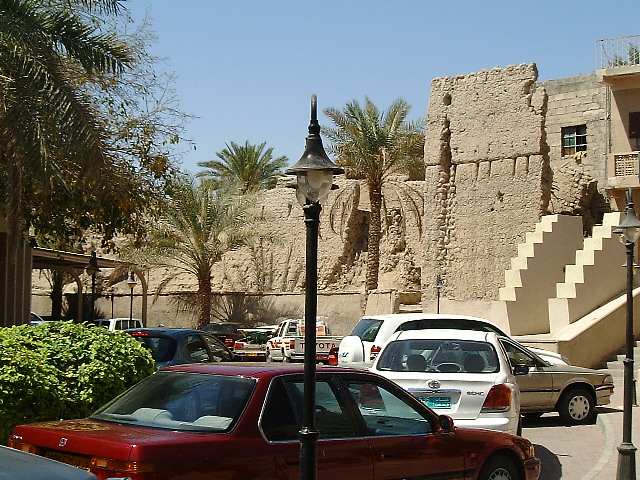
We arrived before 10:00 (our Landcruiser Prado was fast!) and hit on the day of the cattle market, which meant the parking lot was full of trucks with young cattle. The scene reminded me of home. Places of interest for us were the Nizwa Souq, the Fort at Nizwa (1660 CE), and the Mosque. Seeing how it was Friday (the Moslem equivalent of the Christian Sunday), we had to pass on the Mosque (although we got some photos from outside)
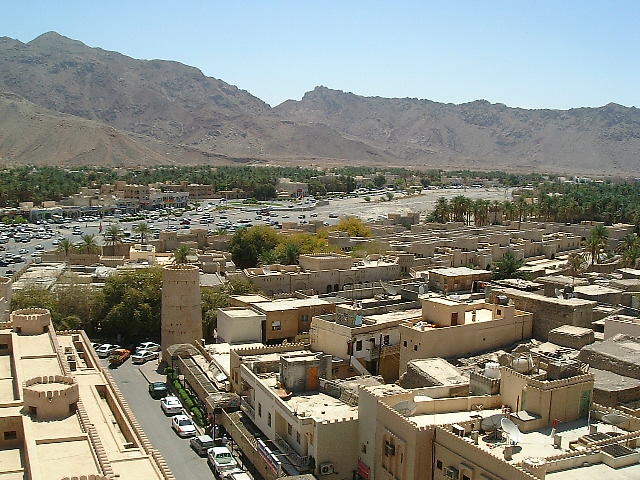
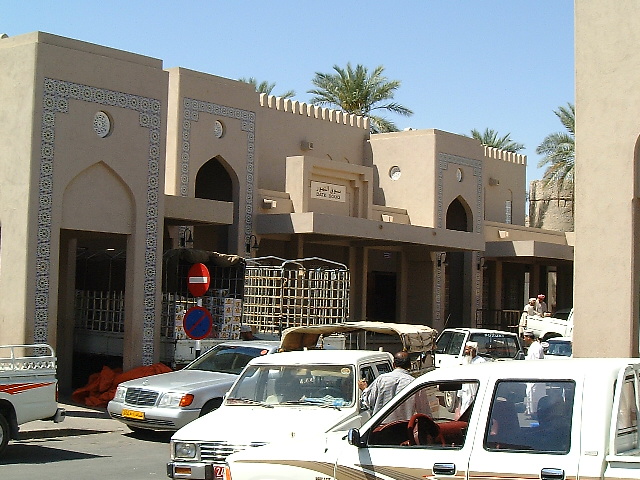
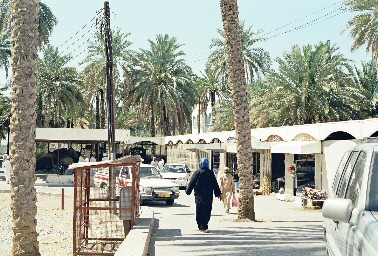
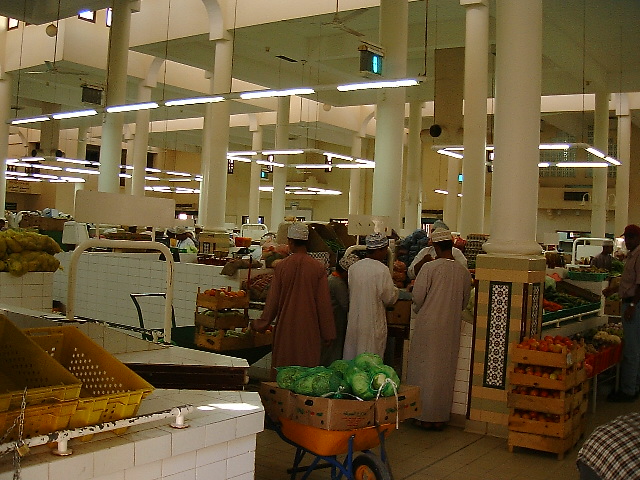
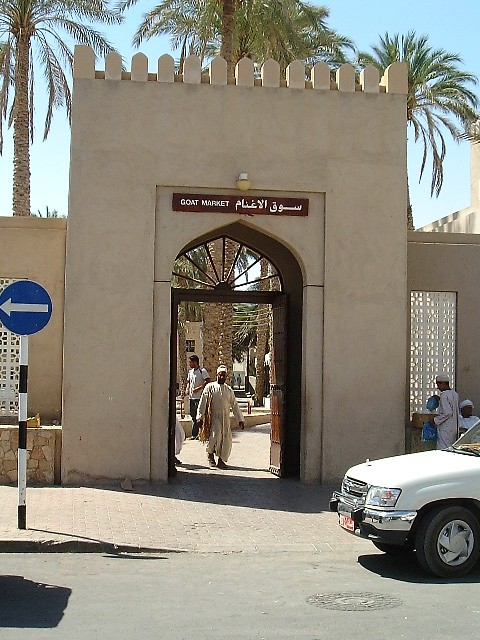
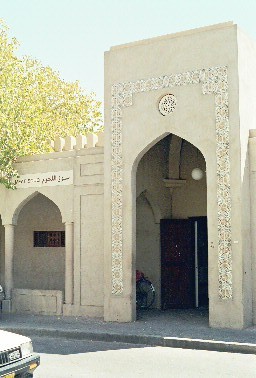
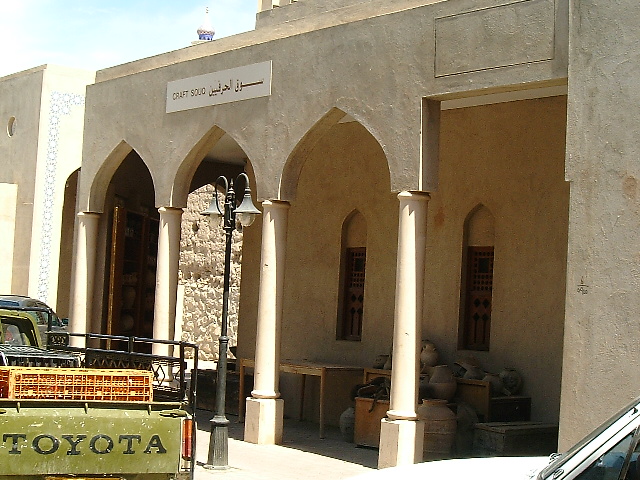
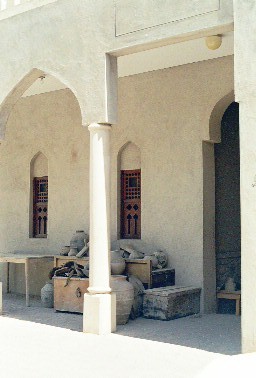
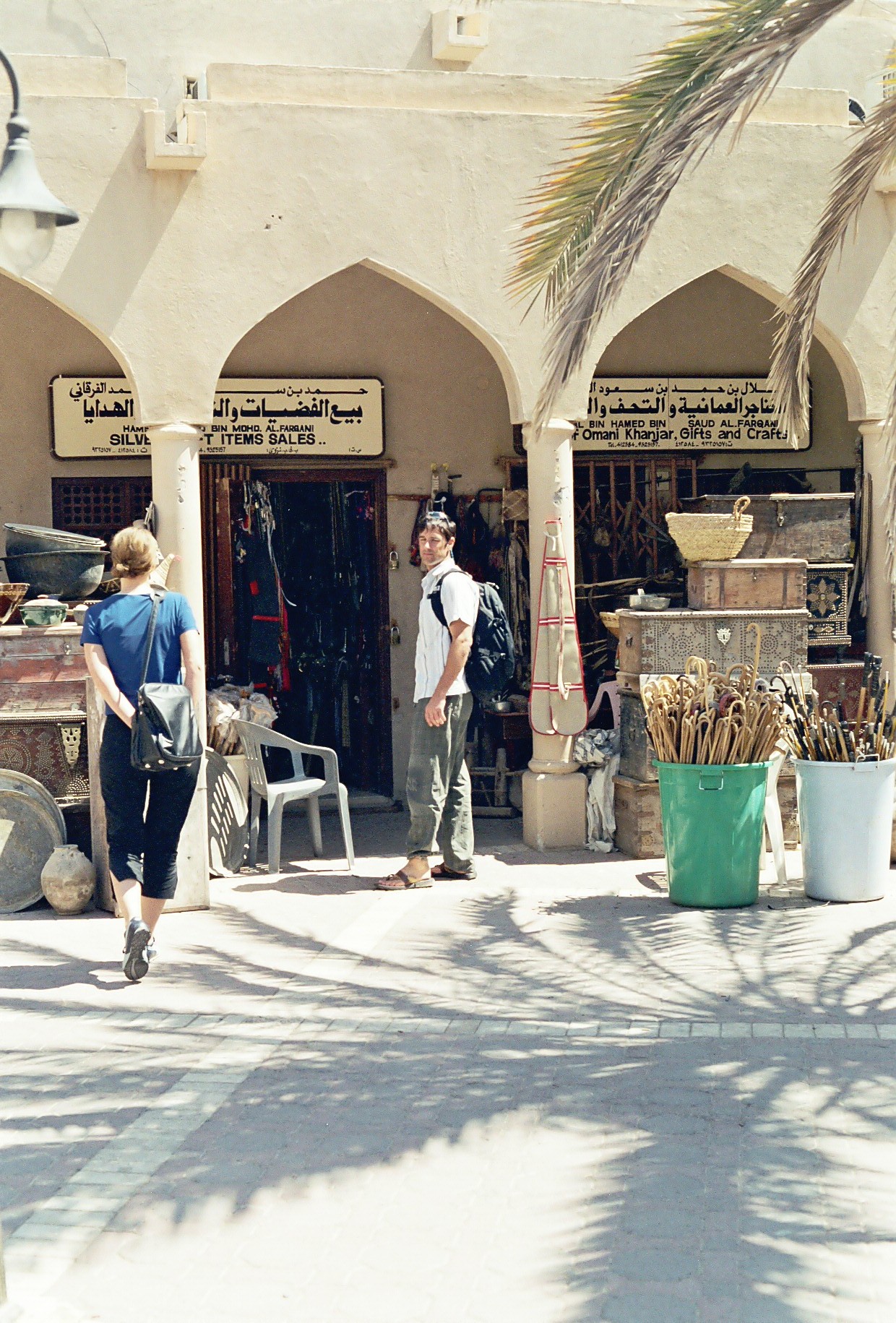
After parking and greeting locals, we headed into the Nizwa Souq, which is by far, the nicest Souq we have ever seen, period. It must be recently restored or renovated. It is very clean and has all the areas separated (vegetables, goat, fish, beef, breads, crafts, etc.). It is almost like it is built for tourists (it may be) but it is functional in that locals are there bartering for goats, buying their vegetables, etc. Here is a high res. distant shot Maggie took of me.
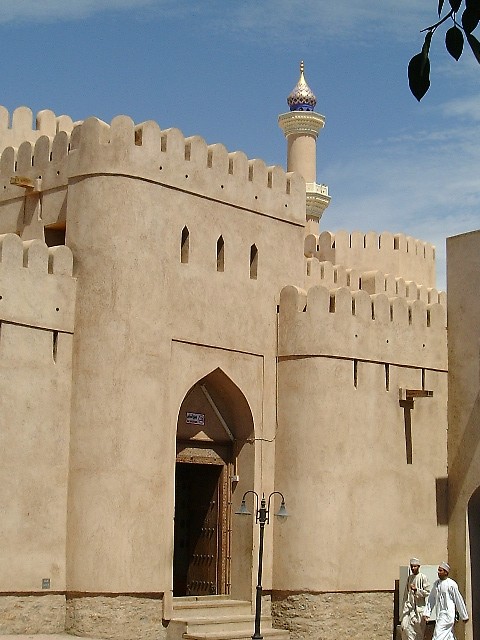
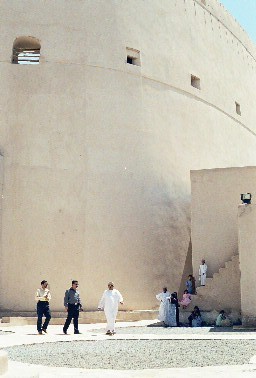
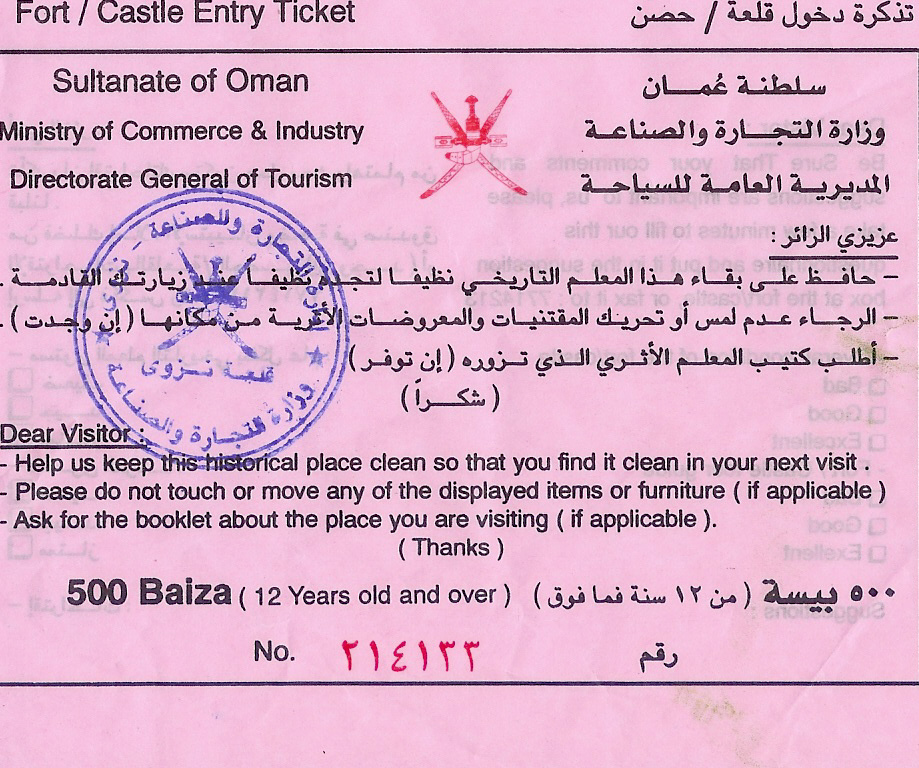
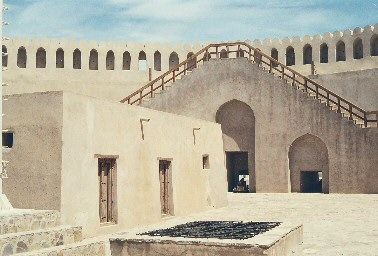
If you walk through the Souq at Nizwa, out the back it leads to the fort. The Nizwa fort is quite old and is different in that it has a huge earth-filled circular tower. The Omani government has undertaken the massive task of restoring and making fit for tourism, 22 of the over 1,000 forts, castles and watch towers. These include the forts and castles at Nizwa, Jabrin, Bayt ar Ridayah, Ar Rustaq, Al Hazm, Nakhal, Bayt an Naman, Barka, As Suwayq, Al Mintarib, Sunaysilah, Bilad Sur, Ras al Hadd, Jaalan Bani Bu Hasan, Al Hillah, Al Khandaq, Ibri, Qurayyat, Khasab, Taqah, Mirbat, and Sadah. Entry to all sites such as castles and museums seems to be a standard 500 Baiza for those 12 and older ($1.30) and the opening hours are about 07:30-16:00. Lonely Planet says entry is free but this is no longer true... Again, the employees at these sites are all Omani's, and include what appear to be village elders, etc. At least one normally speaks English and knows the site history EXTENSIVELY. These gentlemen are happy and proud to explain things for you, or tell you about the history of the keep and region.
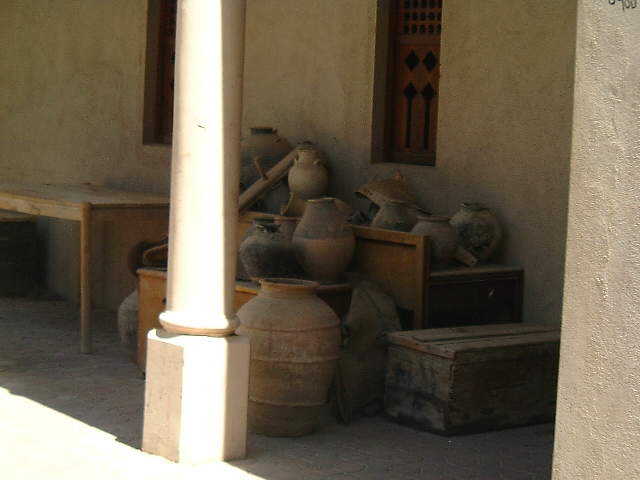
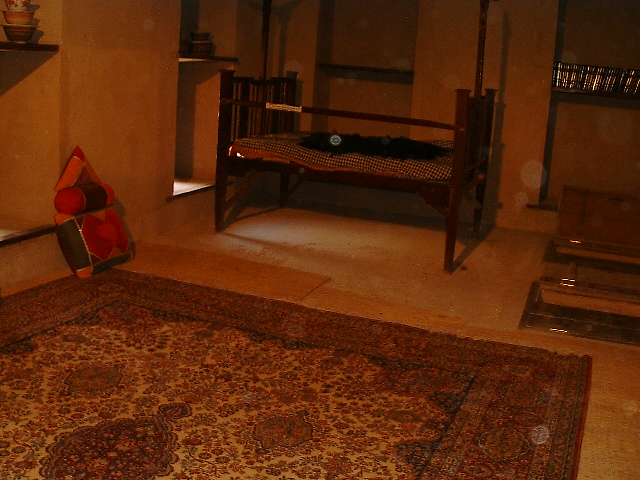
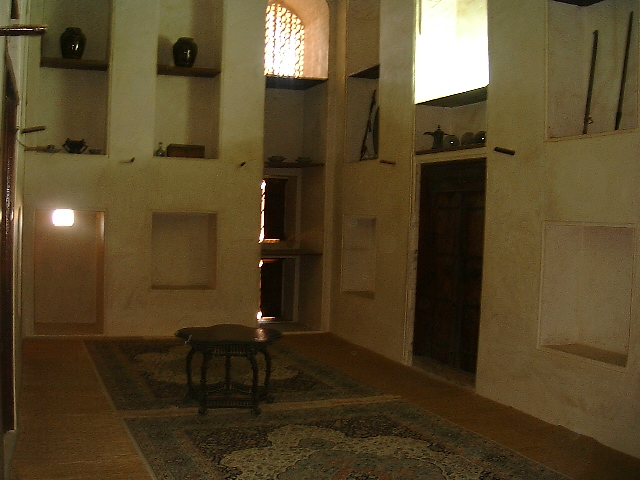
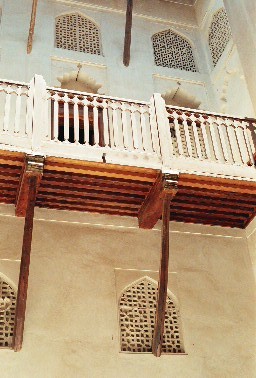
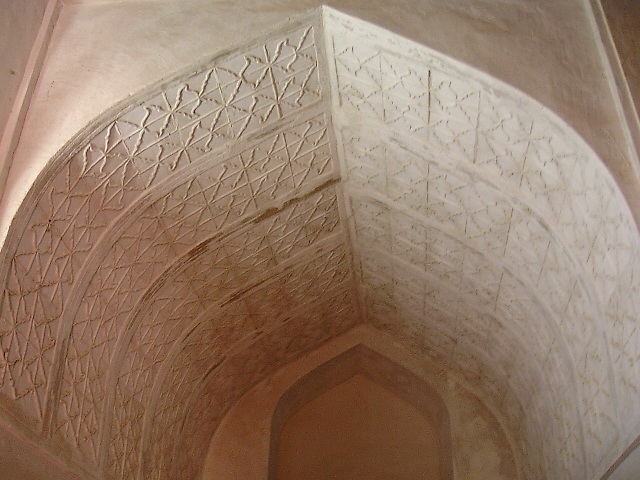
The Imam Sultan bin Saif bin Malik Al Ya'arubi built the "labyrinthine" castle and tower at Nizwa around 1660 CE. The castle and tower have all been beautifully restored down to furnishings in the rooms. We walked through, unguided and explored the various meeting rooms, kitchens and cleaning areas, bathrooms, guest/bedrooms, etc. The restoration has been extensive and it is well worth the visit to Nizwa should you find yourself in Oman-the castle and Souq are not to be missed.
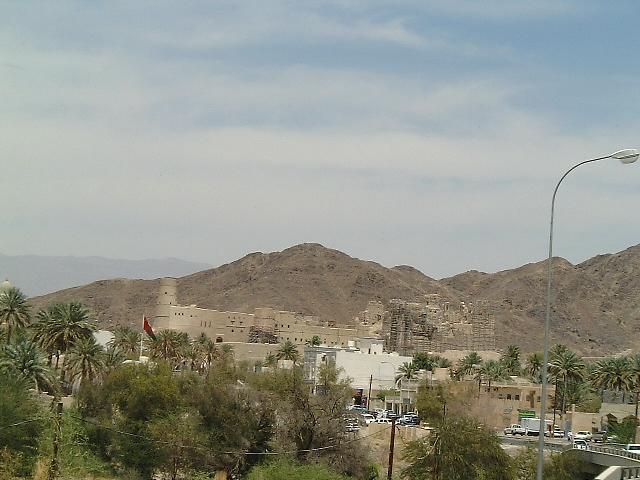
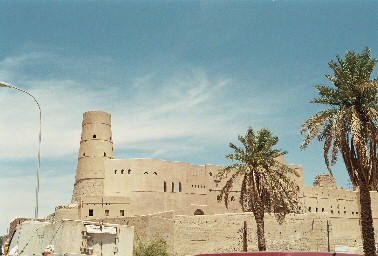
From Nizwa we drove to Bahla. Bahla is the site of a huge fort that is in almost original condition (unfortunately this means it is very rapidly falling apart) The Omani government is undertaking the massive effort of restoration before the walls collapse. This fort has been declared a UNESCO World Heritage Site and been placed on the endangered sites list (there are only 35 such sites in the world) While you cannot go inside, you can view it from outside, avoiding the scaffolding! The foundations are unbaked brick and mud. The fort is an excellent example from the period of the Banu Nebhan, which was the major tribe in the area from around the 12th Century through the end of the 1600's. This fort, when placed on the list in 1987 had not been restored, hence its authenticity! Unfortunately, every year during the rain, the walls have been collapsing. Most of the Friday Mosque collapsed in such a rain and so it is being given large amounts of attention to preserve the massive exterior walls and prevent further deterioration.
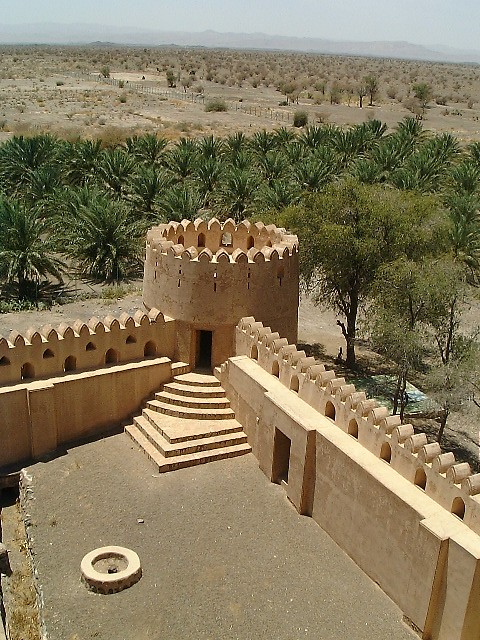
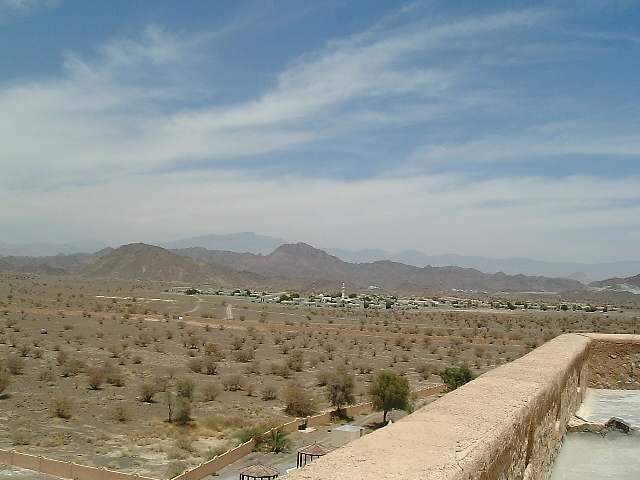
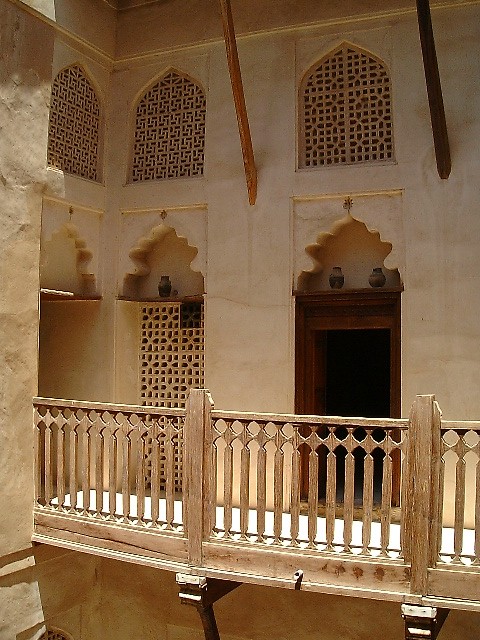
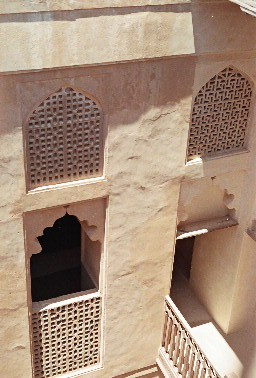
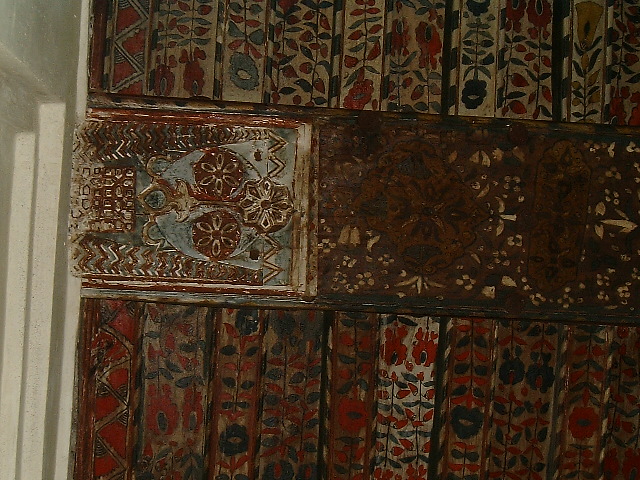
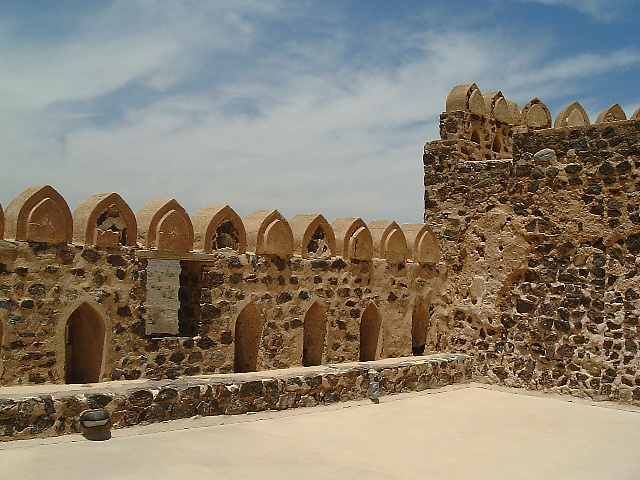
12:00 About noon (Maggie and I tend to keep a busy schedule when exploring!) we arrived at the massive fort at Jabrin. On a side note, these places have clean bathrooms, which is a relief when one has a bad stomach virus like Anton did! Our Lonely Planet guide states, if you only see 1 fort in Oman, it should be this one, and it is correct. This fort is 50 kilometers from Nizwa so if you want to take a day trip from Muscat to see Nizwa and Jabrin, you can! Jabrin Castle was built during the high point of the Ya'aruba dynasty. This was a period in Oman history of peace and prosperity. The Jabrin castle dominates everything around it. The views, from a military standpoint are perfect and one can see attackers coming from far off although it was originally built as a palace. The Imam Bal'arab bin Sultan al-Ya'aruba built the place and is buried in a chamber inside. This guy is famous for being a very good ruler. The castle has the rooms labeled in English for the most part as you will find in all restored castles here. There are sleeping rooms, sitting rooms, kitchens, torture rooms, etc. Inside is a massive courtyard, there are many painted ceilings, especially in the area where the Imams quarters were, and you can go up on the roof. This palace/castle was used for teaching the Quran so there are classrooms as well.
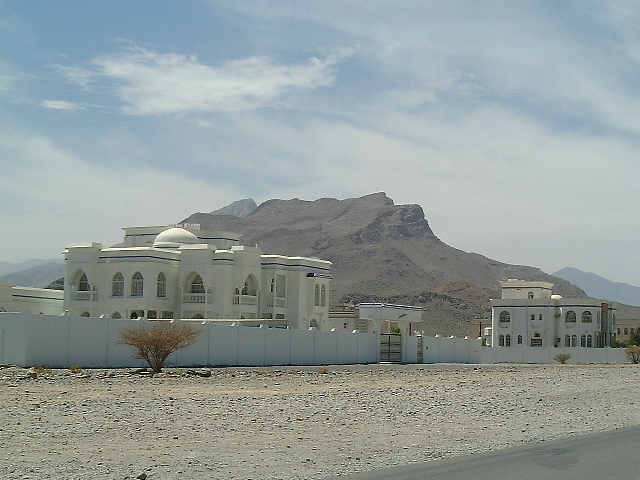
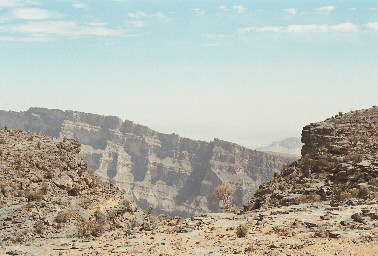
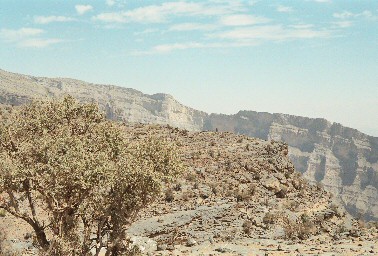
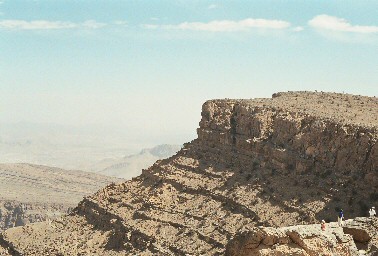
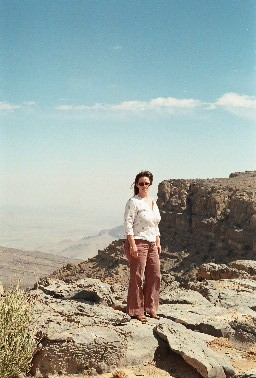
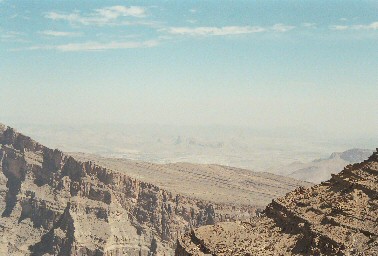
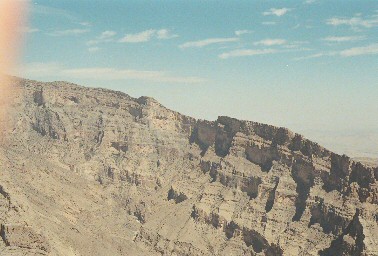
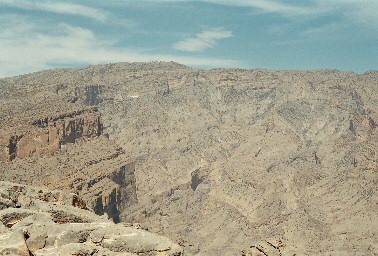
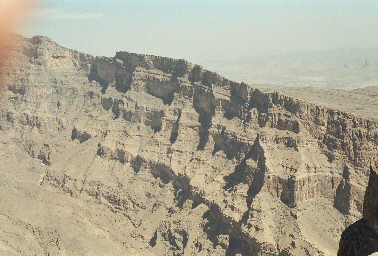
At about 1 or quarter after, Maggie and I headed for the highpoint of our day (literally), which was a drive to Jebel Shams which is a plateau on the Jebel Akhdar mountain range. The plateau is at 2000 meters with a sheer drop of 1000 meters! This is considered Omans Grand Canyon. If you can, you must visit. To get there, backtrack from Jabreen. Between Nizwa and Bahla, in the direction of Bahla there is a small petrol station just before you get to a small village. Take a right at the petrol station up the unmarked but paved road. (Take a deep breath and hope you have the correct road!!!) If you stop at the family run petrol station, you can ask for directions. The owners' young sons run the mini-market and gas station. They do not speak English but understand "Jebel Shams" and are quite polite. They will explain how to get there and are quite eager to look at your guidebooks to, maps, and anything else with photos and writing to see what is being said and shown about their country. These boys are the type of people that make Oman such a great place to visit. SO we got some cold drinks and headed up the road. Along the way is an old fort near the turn off (a small dirt track) for A'Dabbaniyah. You drive for quite a while and then come to another unmarked turnoff, left. There is some sign for something or another but we can't recall what it said (sorry). There are some houses for local folks, so use these as a reference and we recall "Al Hamra" though don't know what it was. We were cruising along, looking at the mountain on our left and wondering why we needed a 4 wheel drive since the roads were all far better than in Qatar at this point.
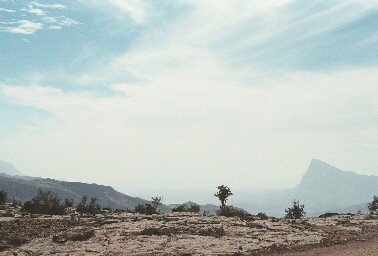
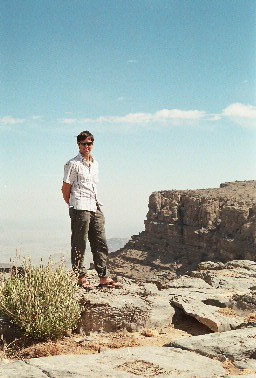
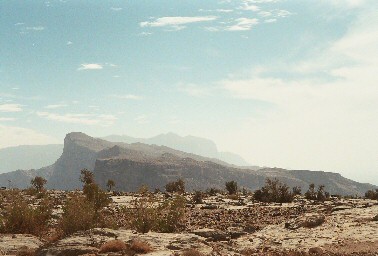
We started winding up the mountain and passed some beautiful villages and sights. About 28 kilometers up the mountain we came to a paving truck. The street now was as steep or steeper than in San Francisco in the steepest areas. I switched the Prado to 4 wheel LOW and suddenly the road ended :-) Time for fun. The remaining drive, we "guestimate" was 20 kilometers was off road. Some of it nice, some quite rough with large stones, etc. Near the top we turned off to another road that led to some type of Omani military radar site. The road was really bad and once at the top of this mountain, it was a typical enclosed military place, albeit small. We dropped down about a 10-minute drive and then up the main path to Jebel Shams. Once we reached the top, we saw it was worth it. The view was amazing and the drop was... well a very big drop. 17-26 (-25)
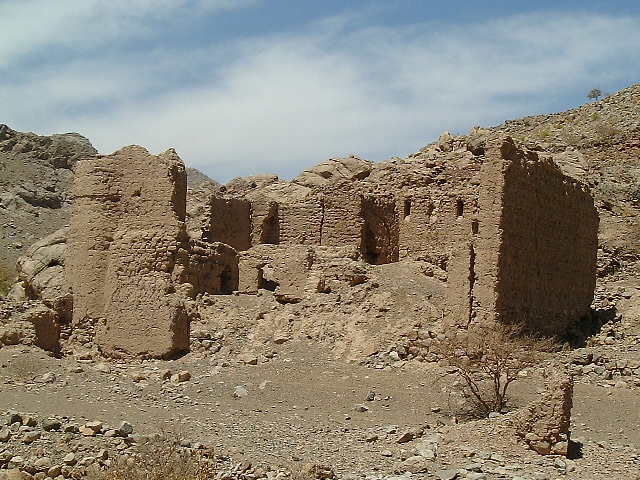
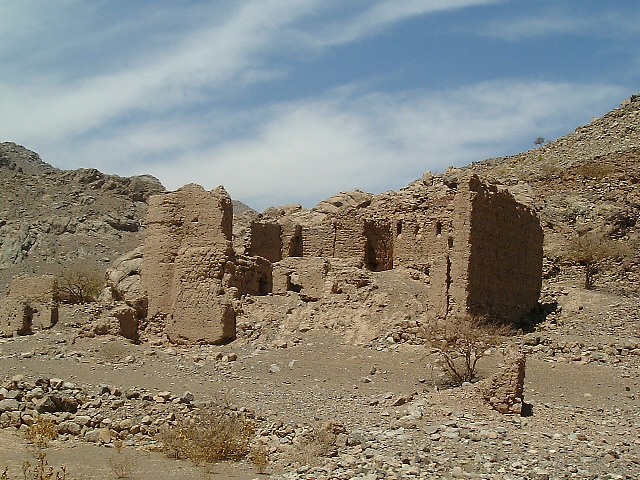
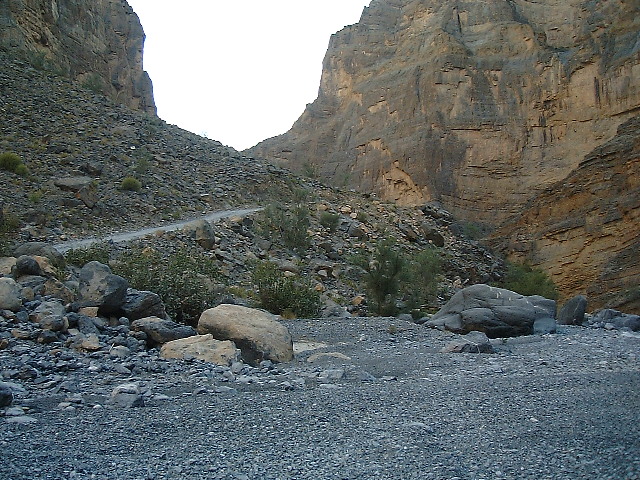
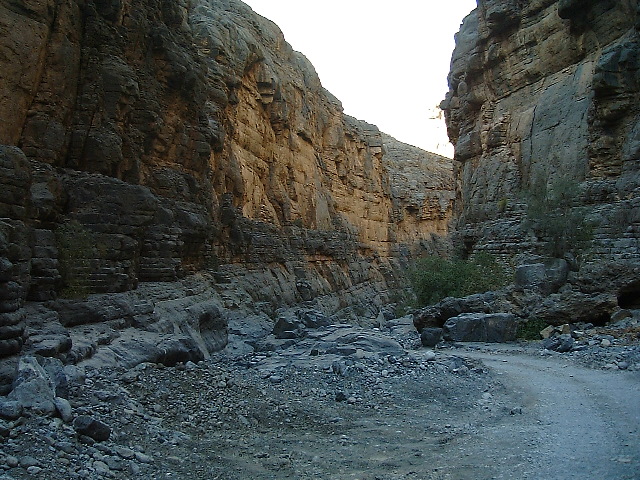
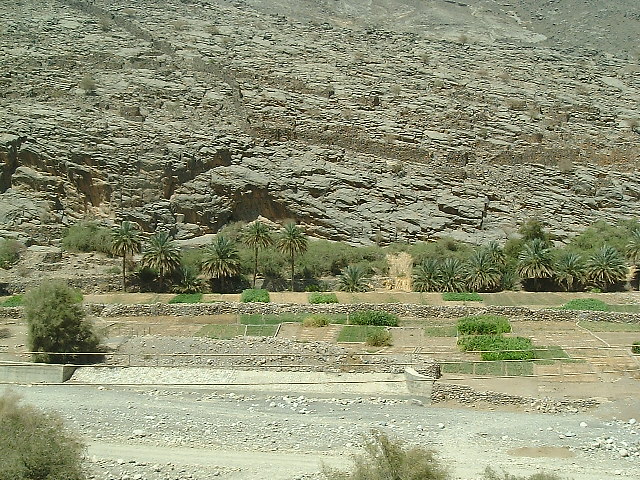
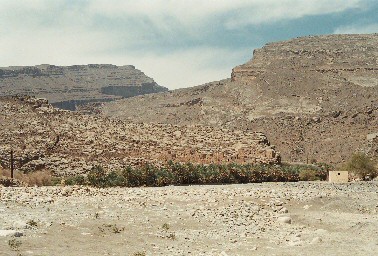
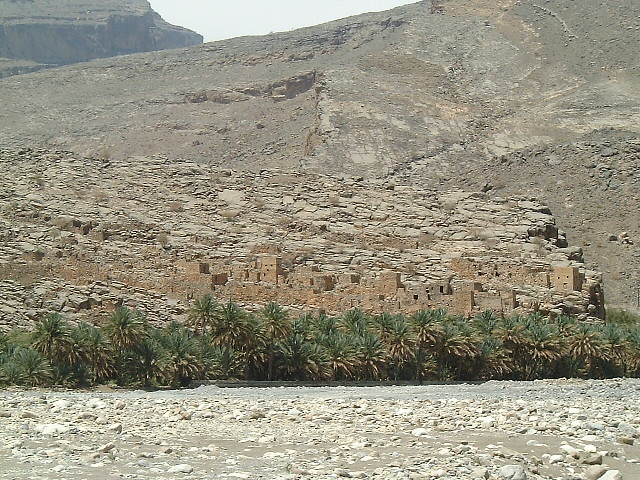
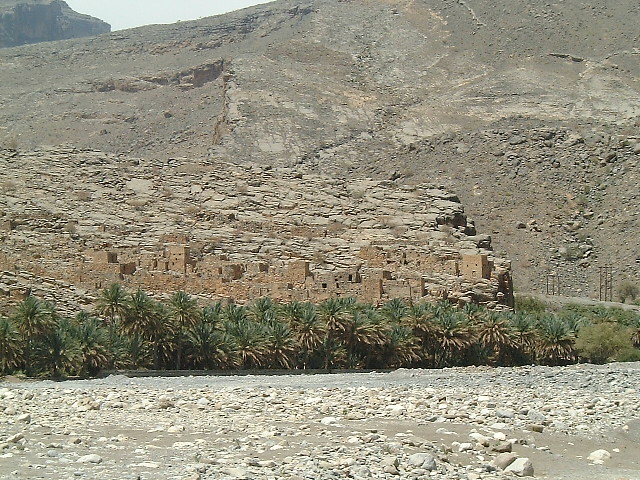
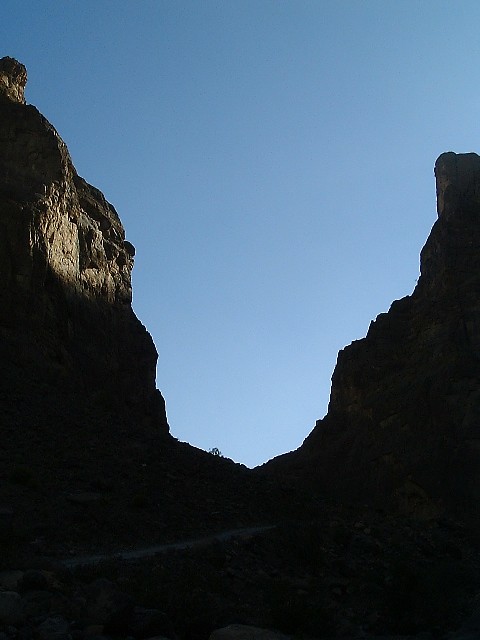
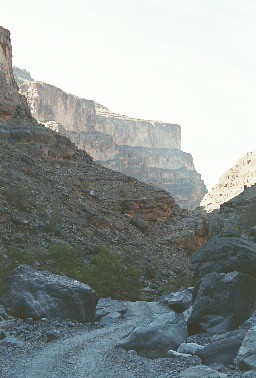
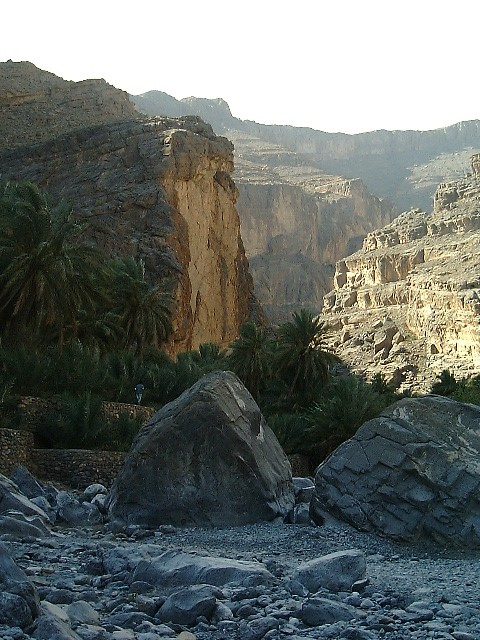
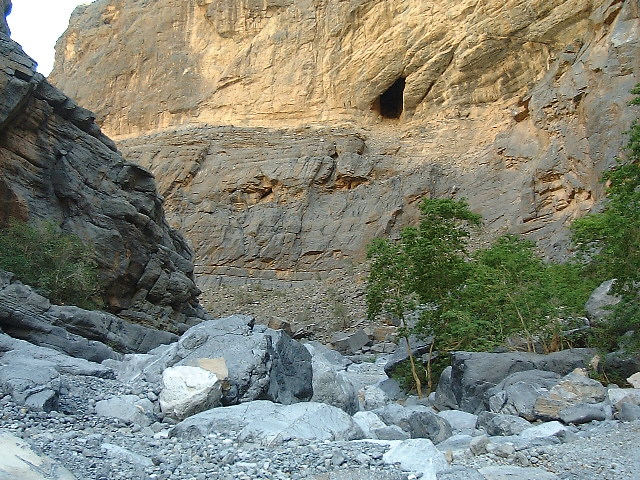
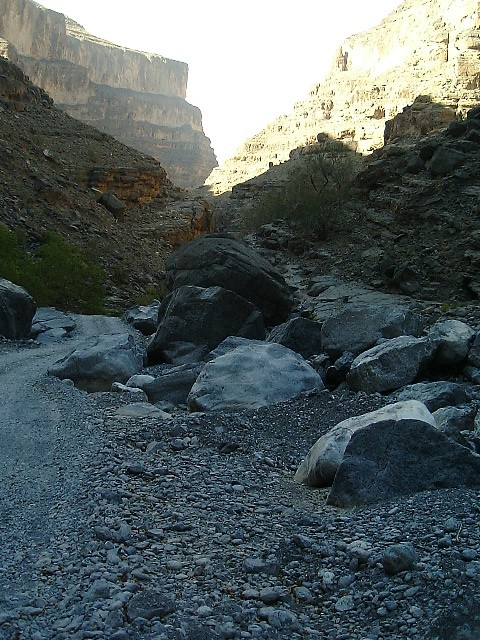
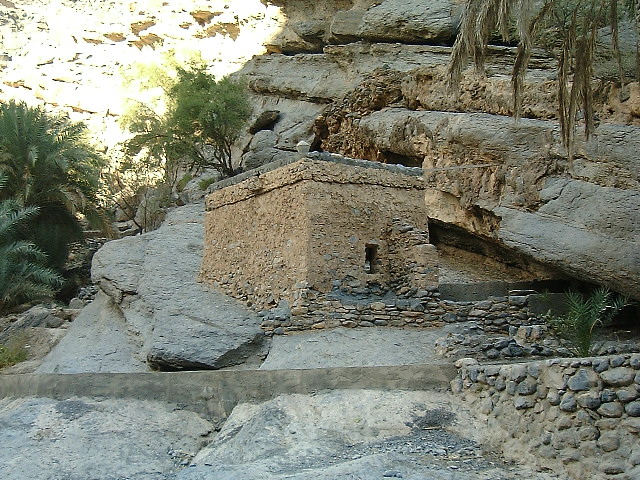
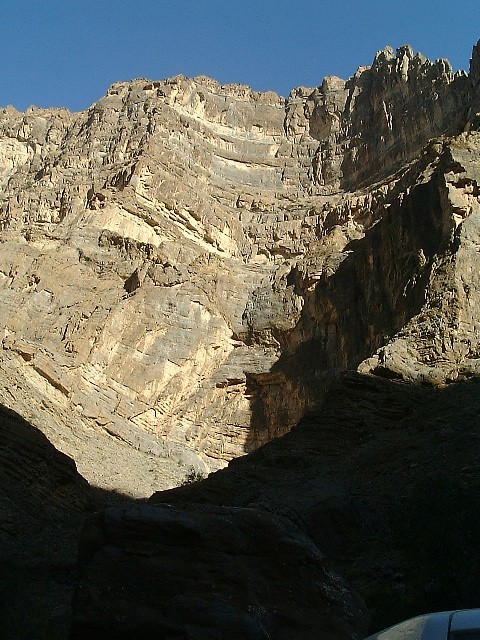
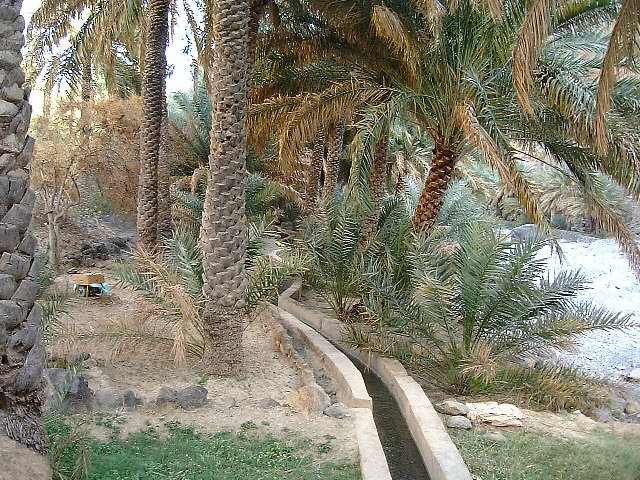
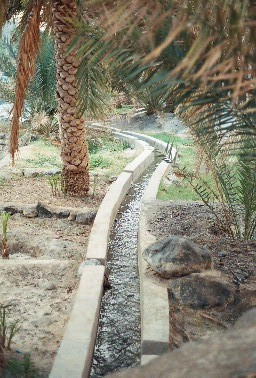
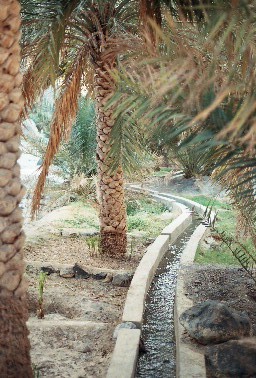
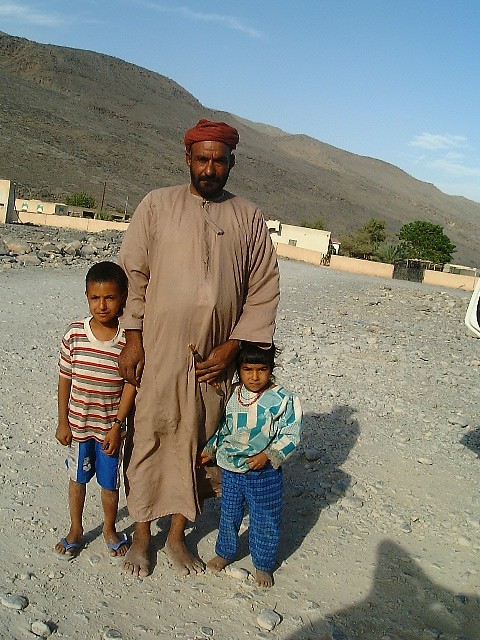
We started back down at about 15:30 as we did not want to do the off-road thing in the dark and had quite a way to go down the mountain. There are a few small villages near the top and some type of campground for those doing the backpack/tent travel. We went back down the mountain to an area known as the Wadi al Nakher (a large Wadi). It had caught our eyes on the way up and it is at the point where the road starts to disappear. There appeared to be a very old village built into the rocks and we had a few hours of sunlight left so we went exploring. We must say it was well worth it but again, do NOT try this without a 4WD with high ground clearance-there are many large rocks and you go through small streams, etc. so be careful! In the Wadi there were several old structures which were used either as storage of some sort or living quarters in among the steep walls of the Wadi. Farming in the wadi was vegetables and dates. For the farming, water of course is needed so they need a way to store and move water, hence the Falaj. The Falaj is the irrigation is made possible throughout most of Oman. The water is run (on the surface) through channels such as these. From the source of the water underground, they sink a shaft in the ground and then move the water through underground tunnels. Some of these tunnels go under desert areas and are several kilometers in length-maintaining these must be hell! With the ability to move water around, the Omanis could settle and farm areas where they otherwise would be unable! On our way into the Wadi, we ran into several children from a local village (the one on the hill!) that wanted to sell us some small woven hanger things... we went ahead and asked them for directions to weave our way through the hillside village to continue up the Wadi-I wish we had some pictures since this was 4wd at its best, no signs, old buildings and it was so steep, backing up you could only see tree tops or dirt! We looped around and ran into a cute little girl. We asked her which way to Wadi Nakher (into it more) and see smiled, said Wadi Nakher, and pointed us straight up the hillside around a bend. We drove and found ourselves at a dead end with a tent and several men weaving carpets-they turned on their best business smiles and then we realized, the little girls dad was the leader :-) She walked up and shrugged her shoulders ! After some greetings we had to unfortunately turn down the offer of coffee since we were rapidly running out of daylight and backed down the hill to continue on our way up the Wadi. Halfway through we passed a farmer and his son and daughter on the path. When we came back, we stopped to offer them a ride back to their village-about 5-8 miles or so. They hopped in and the man pulled out and started playing a very small instrument. It looked like 2 thin flutes tied together with twine. Underneath there was some sort of reed suspended tightly running down the length of the bottom. The man played local tunes all the way back to the village. Everytime we passed some farmers or other locals they stared in amazement at us and the music coming out the windows and then they realized we had picked up a guest !(I could kick myself for not recording the music with my cellphone-I forgot the record function was there) It was quite a time-This nice man also invited us in for coffee but again, we reluctantly turned down the offer due to available light-we really wanted to join him but were concerned about the several hours drive in the dark on the way back. We dropped them off at their village, took quick photos, and headed off on our way about 16:45.
We headed off, making a few stops behind large rocks for Antons continuing stomach problems, and got back to the hotel about 19:30 at night. We stopped at McDonalds at the outskirts of Muscat on the way back since we did not want to go out for dinner-too tired! We had a couple of drinks and crashed in bed-very tired.
*we have many high res images (of the ones starting with T00x) that Maggie took. Due to space on the server we only put up mostly low res. If you want high res. images, email Anton or Maggie...
* be sure to check the bulk photo area off the main page where all the photos from this trip are located. |